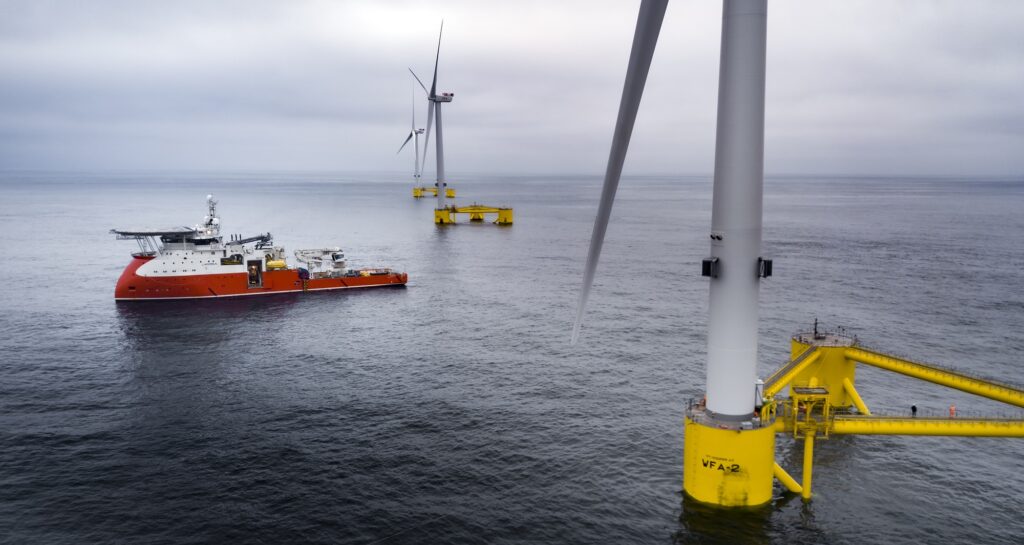
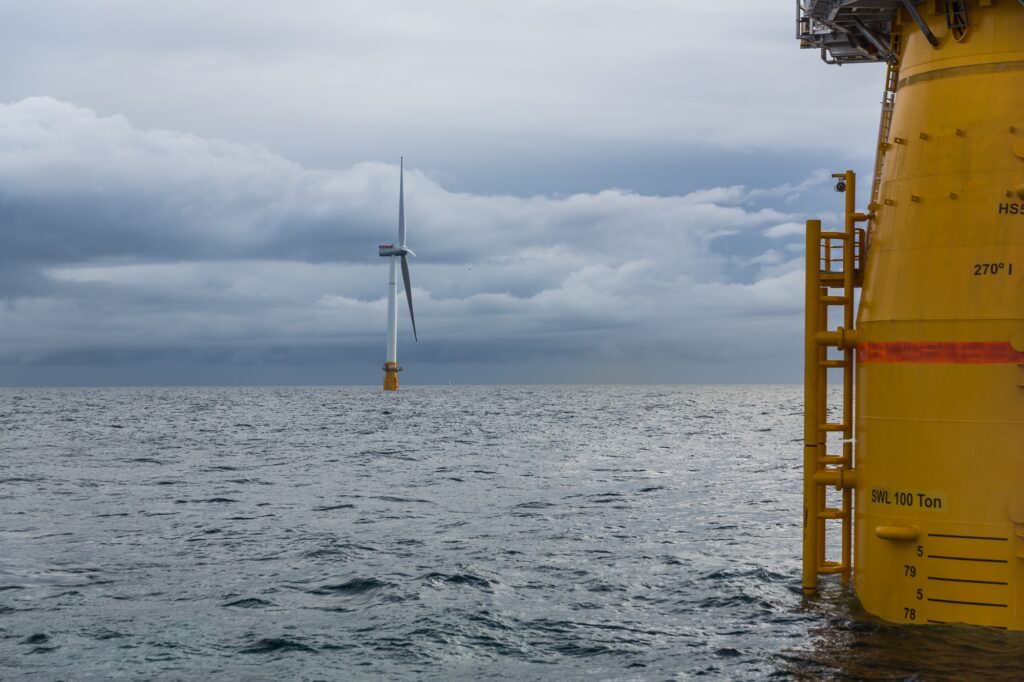
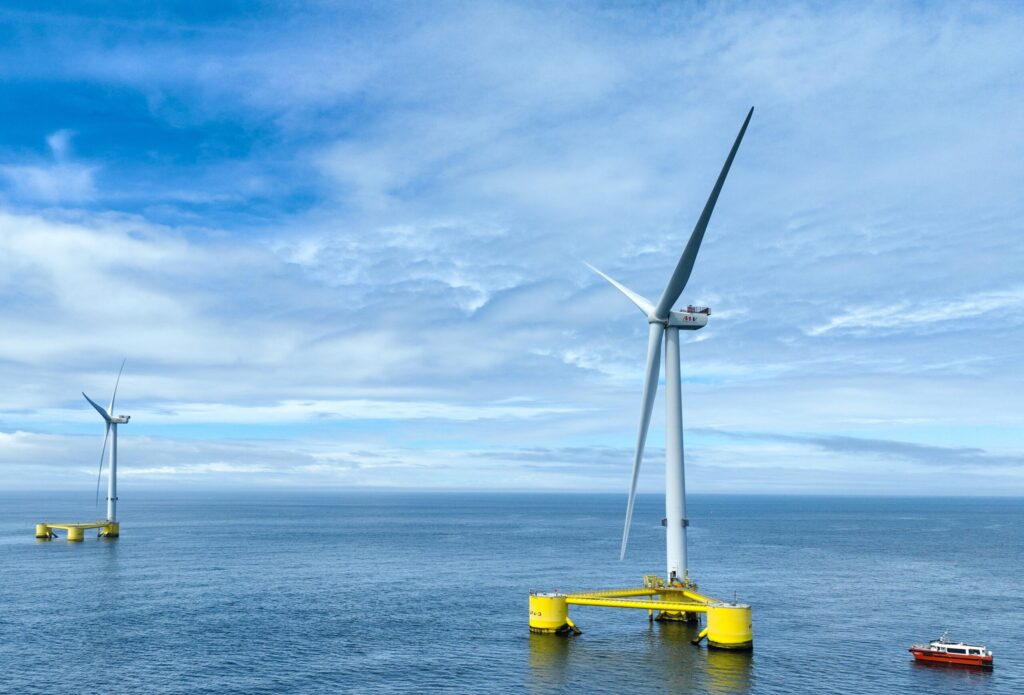
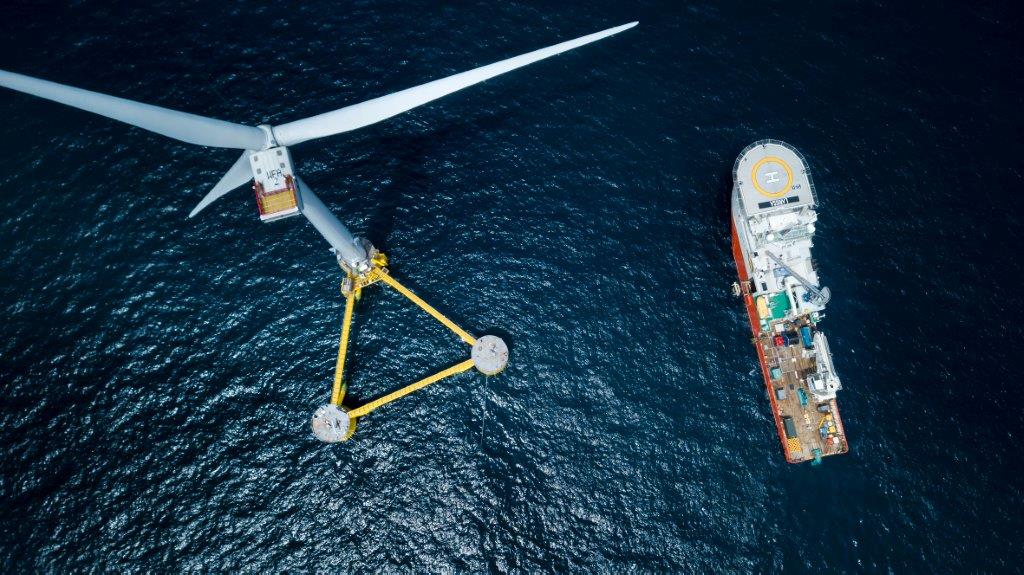
The environmental impacts of electromagnetic fields emitted from offshore electrical infrastructure on marine ecosystems remain unclear. As the offshore wind industry targets the deployment of floating offshore wind technology, understanding these impacts becomes increasingly important. Unlike static subsea cables used in bottom-fixed offshore wind farms, which are typically buried beneath the seabed or placed beneath rock armouring, floating wind utilises dynamic cables that are suspended throughout the water column.
This development means EMF emissions would no longer be confined to the seabed, which presents a potential environmental consideration for pelagic species that inhabit the water column. This report aims to provide an overview of the current knowledge regarding electromagnetic fields from dynamic cables and their potential environmental implications. The findings are presented in two distinct sections. The first section focuses on the technological characteristics of dynamic cable design, exploring the generation and behaviour of EMFs in the marine environment, as well as mitigation and attenuation strategies. The second section reviews existing literature on the environmental impacts of EMFs, with a particular focus on pelagic species – those that inhabit the open water column at varying depths, away from the sea floor – and broader ecological considerations.
A key outcome of this review is the identification of knowledge gaps in understanding the interactions between EMFs and marine life. Given the emerging nature of floating wind technology, these gaps highlight the need for further research to inform environmental assessments and industry best practices. This report offers a resource for industry, stakeholders, policymakers, and researchers, supporting informed decision-making as the offshore wind sector continues to evolve