The UK Government has set ambitious targets associated with the decarbonisation of the energy system and investment in the growth of low carbon, renewable technologies. Offshore wind is critical to this process, and the UK is already positioned as a global leader with an operational capacity of 16.1 Gigawatt (GW) (Renewable UK, 2026). The Clean Power 2030 Action Plan outlines an ambition of 43-50 GW of offshore wind by 2030, and the plan highlights the longer-term role of floating offshore wind (FOW) technology in unlocking strong wind resources at deeper water depths, particularly as marine spatial planning constraints increase (Department for Energy Security and Net Zero, 2025).
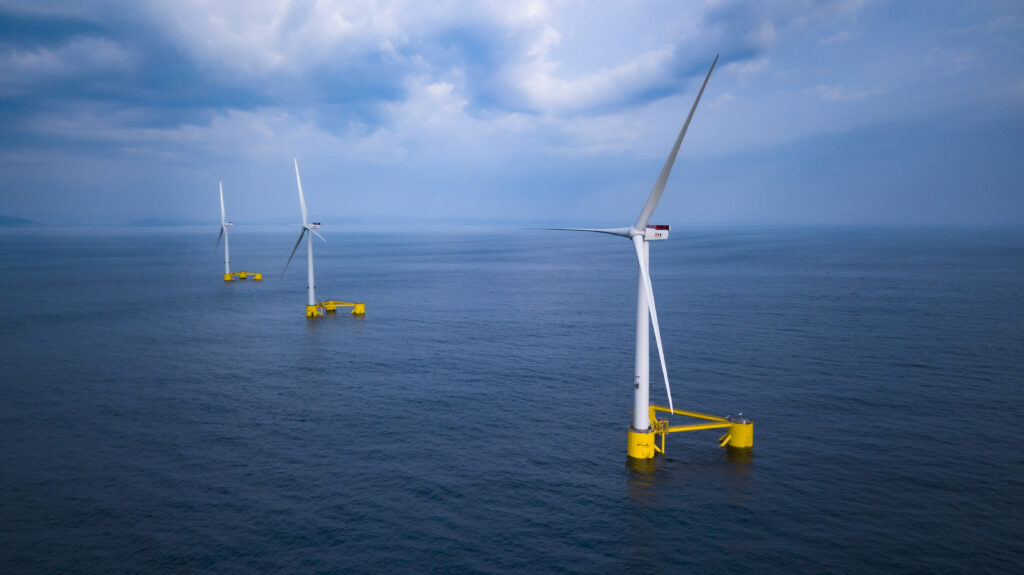
At the time of writing, the UK has two operational demonstrator FOW arrays: Hywind Scotland and
Kincardine, both located in Scotland. Furthermore, Crown Estate Scotland has granted seabed exclusivity agreements for FOW projects totalling around 25 GW of potential generating capacity in Scottish waters (Crown Estate Scotland, 2025). It is vital that the floating offshore wind industry develops a sound understanding of the environmental interactions large scale projects will have on the marine environment. Interactions need to be understood, managed and mitigated before the first large scale projects are deployed, to ensure the industry can scale rapidly and support the delivery of a sustainable net zero.
As the pace of FOW development increases it is recognised that, due to the technology’s earlier commercial status relative to traditional bottom-fixed wind, a range of technical, commercial, and consenting challenges will need to be addressed. One important area of focus is the interaction between FOW technology and the environment, including the associated uncertainties that must be resolved through targeted monitoring and research.
With this context in mind, the Offshore Renewable Energy (ORE) Catapult’s Floating Offshore Wind Centre of Excellence (FOW CoE) launched the Floating Offshore Wind Environmental Interactions project in September 2021, as part of its Development and Consent workstream. Fundamentally, this
multi-phase initiative sought to:
• Identify potential knowledge gaps and the requisite activities to address them; and
• Coordinate onward workstreams to address these gaps, including relevant research initiatives and leading the development of innovative solutions.
In line with the first of these objectives, the FOW CoE published its Floating Offshore Wind Environmental Interactions Roadmap in June 2022. The Roadmap identified a range of potential knowledge gaps related to FOW environmental interactions across several topic areas and proposed corresponding research and activities to address them. A prioritisation exercise conducted during its development highlighted the areas representing the most pressing need for industry intervention.
This is an updated new version of the Floating Offshore Wind Environmental Interactions Roadmap which builds on the work undertaken in 2022 and will inform the focus of the Environmental Interactions Strategic Programme going forward.