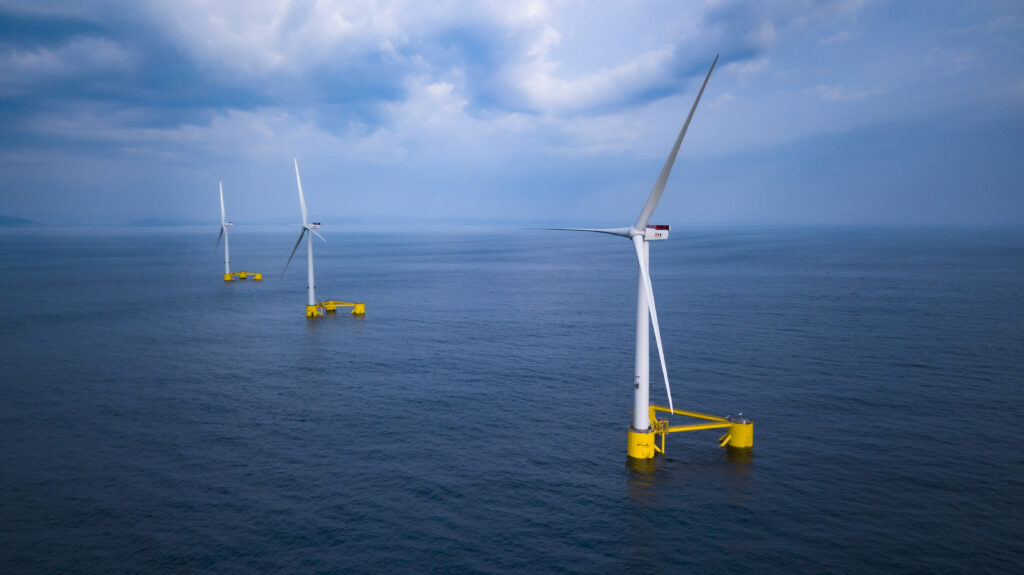
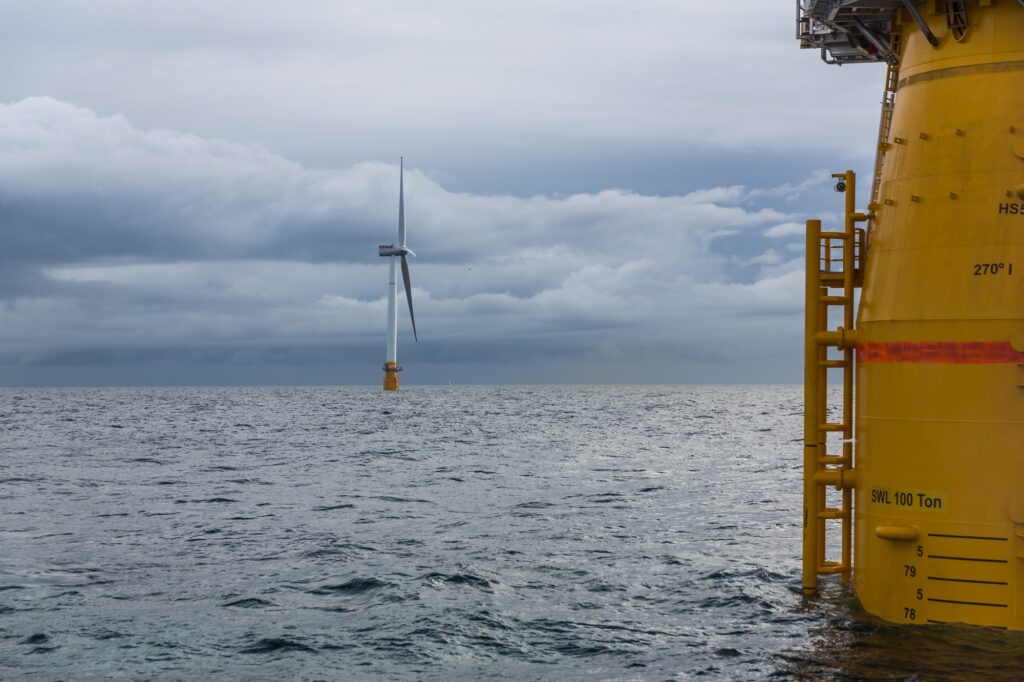
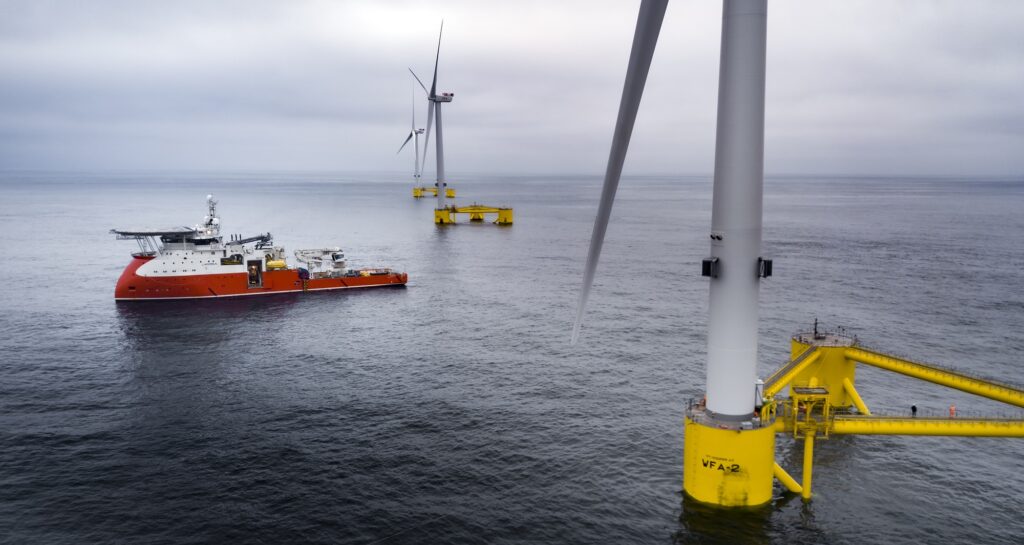
Offshore wind is a thriving industry slowly expanding into large-scale floating offshore wind (FOW). The UK’s net zero ambitions are for FOW to potentially reach 5GW by 2030, emphasising support for the industry. As offshore wind and FOW capacity increases, there is an demand increase for major component replacement (MCR) operations. Large component failure poses a major risk to FOW. Deep sea locations, necessary for large-scale FOW farms, are unable to utilise the jack-up-vessels (JUVs) typically used for MCR at traditional fixed-bottom offshore wind farms.
MCR strategies for FOW rely heavily on tow-to-port (TTP) operations. For this type of operation, the turbine must be disconnected, towed to port for repair and then towed back to site for reconnection.
This puts strain on port space, vessel demand (especially for long tows), and risks further damage to mooring lines and cables. For some key components, in-situ MCR can be conducted as an alternative to TTP operations. However, in-situ MCR technologies, especially for FOW, are generally unproven and at lower technology readiness levels (TRL).
Working alongside project partners, this project directly supported the advancement of future in-situ MCR technologies through advanced modelling. This project provides a pathway to bridge the gap between design and offshore testing for in-situ MCR solutiosn through advanced simulation and modelling.
This project partnered with the National Decommissioning Centre (NDC) and SOLVE Wind. The NDC provided the offshore MCR modelling utilising their Marine Simulator, and SOLVE Wind provided details on their up-tower crane in-situ MCR solution.
Title Photo Credit: 20251204_France_Offshore_Eolmed_towing_Credit_Qair_-35